Call NowCall
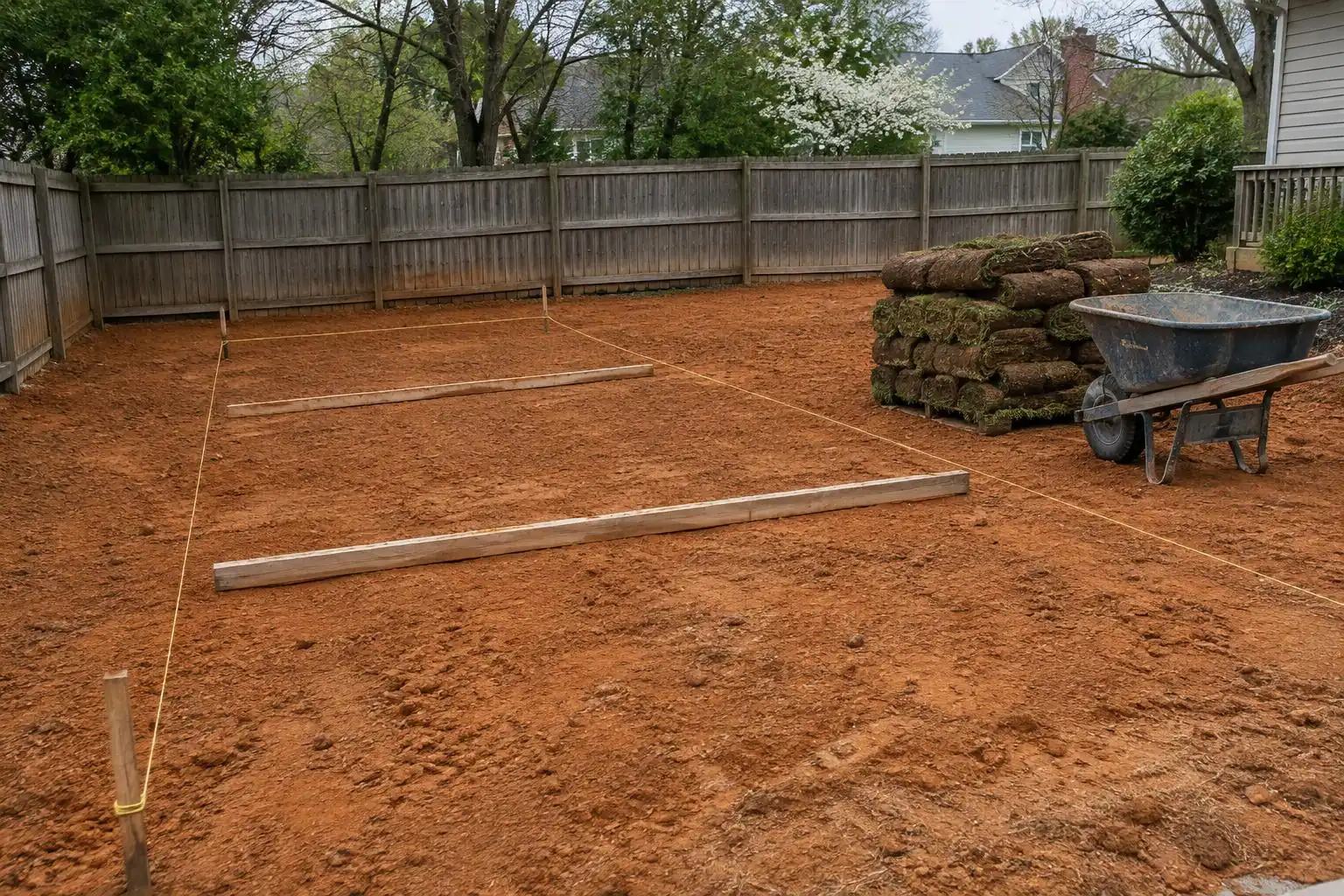
Stripped back yard of orange clay with string lines, screed boards, stacked sod rolls and a wheelbarrow

Sod Removal for Artificial Turf Gaithersburg MD: Artificial Grass Base Preparation and Turf Base Material

Reliable Sod Removal and artificial grass base preparation in Gaithersburg, MD and Montgomery County

  • Free quotes
  • Licensed and insured
  • Compacted stone base

Gaithersburg Artificial Grass Installation handles sod removal for artificial turf and the base work beneath it for owners and managers in Gaithersburg, MD and Montgomery County. Existing lawn removal, grading, stone and compaction come first, because the base sets how a turf yard drains and holds its shape. A lumpy, soggy lawn becomes a firm, graded bed that is ready for turf. The same crew can lay the turf afterward, or you can book the prep on its own.

Why homeowners choose us:

  • Free quotes for lawns, patios, pet runs and play areas
  • Licensed and insured certificate on request
  • Compacted stone base laid under every turf job, never turf straight on soil
  • Old sod hauled away spoil and cut-off turf leave with the crew

Licensed and insured crews with years of turf work do this part of the job, since mistakes made here show up for a decade. Each yard gets measured depths, compacted turf base material and a clean haul-away of the old sod. Your free quote lists the area, the depth and the spoil, so the work is priced before any digging.

Get a FREE Artificial Grass Installation Quote

No obligation. Free quote.

What Sod Removal and Base Preparation Involves in Gaithersburg, MD

The base is the part of a turf yard that nobody sees and everybody depends on. Each step below appears in your quote wherever the yard calls for it, and the depths are set by the soil and by how the space will be used:

  • Existing lawn removal cuts out the sod and the root zone, so living material never sits beneath the turf.
  • Depth setting decides how many inches of soil leave, based on the stone depth the use requires.
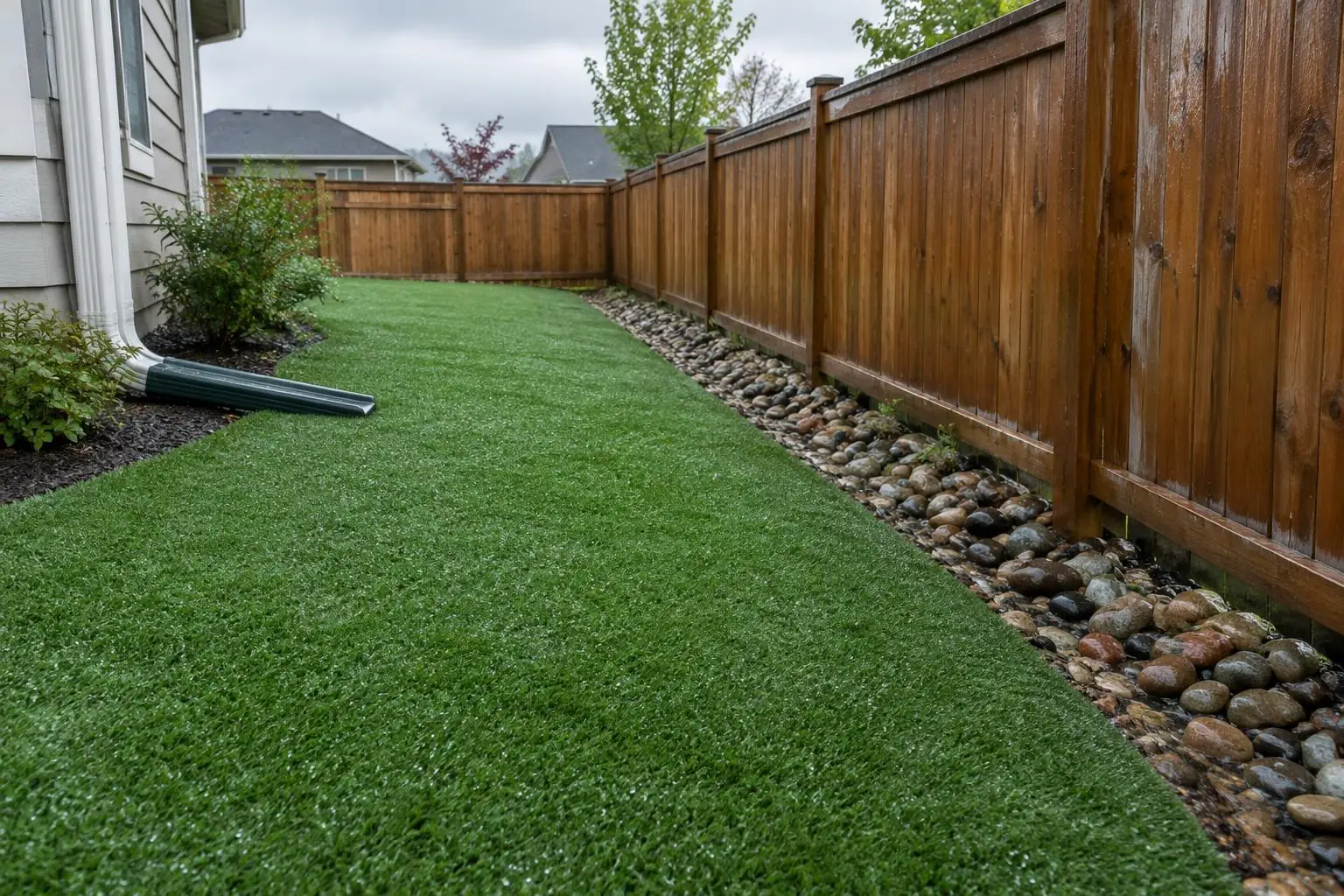
  • Grading tilts the bed toward an outlet on your lot, so water always has a clear way out.
  • Artificial turf subbase is the compacted layer of crushed stone that carries the load and passes water down.
  • Compaction presses every lift with a plate machine until the stone stops moving when you walk on it.
  • Weed barrier is a woven fabric laid between soil and stone where roots and clay need to be kept apart.
  • Fine leveling screens the top layer of stone to a smooth, even plane for the turf.
  • Spoil haul-away loads sod and soil onto our truck, so nothing is left in the yard.
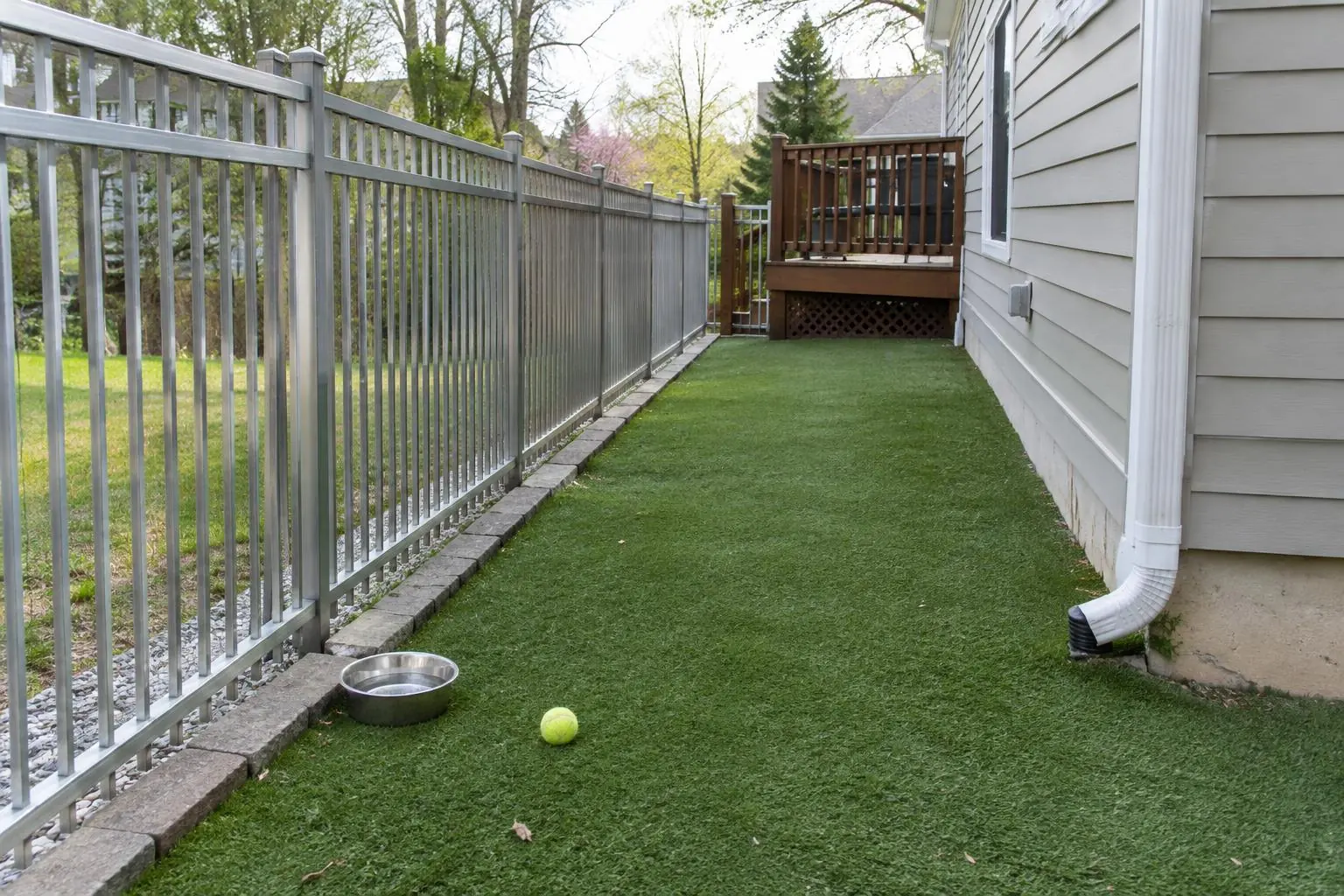
Artificial turf dog run along an aluminum fence with a steel water bowl and tennis ball

When You Need Sod Removal and Base Preparation in Gaithersburg

Owners usually call for base work when an older turf yard is sinking or when a lawn will not drain. A turf yard is only as good as the base under it, on a patio-size lot or a full back yard. Many people ask for prep first and the turf later, and we are glad to do it that way. Once the bed is ready, our artificial turf installation crew can lay the surface, or a pet turf or putting green job can follow.

Signs Your Yard Needs Base Work First

  • Soft, spongy ground under the lawn means the soil is saturated, and turf laid on it will sink.
  • Standing puddles after rain show that the ground is flat or compacted, and they widen as the grass thins.
  • Low spots and ruts from mowers, kids or equipment come back through the turf unless they are rebuilt.
  • Old turf with ripples shows that the base has shifted, and the turf can be lifted and relaid.
  • Weeds pushing up through a seam point to missing fabric or a thin stone layer.

Gaithersburg Clay and Turf Base Prep: What Changes Under the Sod

Base prep here is a response to local ground, and the points below shape every depth we set. The crew checks them on the visit and writes the result into the quote. Each one affects how deep we dig, how much soil leaves and which paperwork has to be ready before the first shovel breaks the sod.

Clay sets the depth

University of Maryland Extension tests drainage with a hole 12 inches deep and 12 inches wide, and notes that poorly drained soils are often high in clay. Under turf, clay holds water against a thin base. We dig down to firm ground, set a deeper stone layer over it and compact each lift so the surface cannot sag. A test hole on the visit shows how fast the yard drains, and we record that result in the quote.

Spoil volume and the permit line

A sediment control permit applies once land disturbance reaches 5,000 square feet or 100 cubic yards of earth moved. A large yard with a deep cut can add up faster than owners expect. The crew measures the spoil during the visit and tells you whether the job sits under the line, before any soil leaves the property. Most house lawns stay under it, and we say so in writing.

Sod removal on association lots

Homeowner associations here need prior written approval for exterior changes, and the approval often names the lawn. Our itemized quote lists the depth, the stone and the haul-away, so the board can see exactly what will change. A short plan sheet can go with it if the board asks. County code also counts artificial turf as impervious surface, which is one more reason the base is graded to a real outlet.

How Much Does Sod Removal and Base Preparation Cost in Gaithersburg, MD?

Prep is priced inside the whole turf job, since it carries the heaviest labor on most lawns. Crushed stone and similar base material commonly run $0.30 to $0.70 per square foot, and excavation in the Washington area runs $50 to $200 per cubic yard. Depth, spoil volume, equipment access and slope move the final number. A separate base line in the quote lets you compare bids fairly. A complete lawn install lands between $5,525 and $9,300, and the artificial grass cost guide covers the rest.

Our Sod Removal and Base Preparation Process in Gaithersburg, MD

The prep moves through four stages, from living lawn to a finished bed. Small yards finish in a day or two, while a large or complex yard may need up to a week.

1. Free quote and yard walk

We measure the lawn, probe the soil with a rod and look at where water goes after rain. The crew checks the gate width, the slope and the best spot to load spoil. Your free quote lists the area, the base depth and the haul-away, so you know exactly what the prep covers before it starts.

2. Lawn and soil removal

Sod and the root zone are cut out in sections and loaded onto our truck. We dig to the planned depth, check it with a string line and remove any soft soil that would settle later. The bed is left clean and level, with no roots, rocks or buried debris that could poke through the turf.

3. Grading and stone

After the bed is cut, the crew lays fabric where the soil needs it and spreads crushed stone in lifts. The crew sets the fall, then runs the plate compactor over each lift until the surface is hard. Every lift is checked with a straightedge, so the finished base is flat, firm and ready for turf.

4. Check and handover

We screen the top layer to a smooth plane, rake out the high spots and test how water moves across the bed. The yard is swept and the spoil is gone. You get a walk-through of the finished base, along with your quote and final price, so the prep is documented before turf is ordered.

Sod Removal and Base Preparation FAQs: Gaithersburg, MD

How much does sod removal for artificial turf cost in Gaithersburg?

Base work is priced inside the full job, which lands at $5,525 to $9,300 for a typical lawn. Stone base material runs $0.30 to $0.70 per square foot. Your quote lists the prep as its own line, so you can see what depth and spoil add.

How deep should the base be for artificial grass?

Most yards need a few inches of compacted stone, and clay yards can need more. The crew sets the depth on the visit, after probing the soil and checking how it drains. Heavier use, such as a play area, can call for a deeper layer.

Can artificial turf go over existing grass?

Living grass cannot stay under turf, since the roots rot, the surface sinks and water stops moving. Sod is cut out first, and stone goes in after it. This order keeps a finished lawn flat for years.

What is the best turf base material?

Crushed stone with a mix of sizes, compacted in lifts, is the standard for turf base material. A firm, free-draining layer holds the turf flat and passes water down. We pick the exact stone to suit your soil and your drainage.

Do I need a weed barrier under artificial turf?

An artificial turf weed barrier helps where roots and clay need to stay apart from the stone. We use fabric where the soil calls for it, and we leave it out where a clean stone layer is enough. The quote names it either way.

How long does base preparation take?

A compact yard is prepped in a day or two, and a large or tricky yard may need a week. Compaction takes the longest, since each lift is firmed before the next one is added.

Can you remove sod for a turf job another crew will finish?

We can do the prep on its own, and the bed is left graded and compacted for whoever lays the turf. See our commercial artificial turf page for shared sites.

Gaithersburg Artificial Grass Installation serves Gaithersburg and Montgomery County.

Get a Free Sod Removal and Base Preparation Quote in Gaithersburg, MD

Mon–Fri 7am–6pm · Sat 8am–2pm

Call Now Free Quote